SUPPORTING PEOPLE WITH 
|
|
|
|
Hiii,
We’ve made it to the halfway mark for the week! 🎉
Even just surviving is an accomplishment some weeks, so if that’s you, then hang in there!
I’m still in Florida, being a conference girly and running my social battery all the way down, but it’s still a good time so far, so a win is a win.
This week, we're getting into why the talent pipeline is broken in a very specific and very preventable way, why a new generation is finally calling out the leadership playbook that never worked for most of us anyway, and why the grads landing in your onboarding sessions right now are carrying more frustration than their welcome emails are prepared for.
It's a lot, but that's why you're here, and that's why I'm here. 💪
Let the discussion begin!
|
|
|
|
✨ Don't forget: You can always vent, celebrate a win, or find support in Safe Space
|
|
|
|
SPONSORED BY RIPPLING
You know what's wild?
Somewhere out there, an HR leader just ran a 30-second AI prompt and got the insight that would've taken you three hours and a pivot table to find. 😲
All because they simply used better prompts!
Rippling's free virtual event on May 21st is your chance to see exactly what they're doing.
You'll see real customers and real use cases across HR, IT, and Finance that you can take back and run yourself...on the same day!
Submit your own AI prompt to be entered to win a $500 flight voucher to a destination of your choice.
Stop reinventing the wheel and start using AI for the stuff that will make life easier. 😊
|
|
|
|
🔍 Employers say they struggle to find workers with the right AI skillset
The TL;DR: 53% of employers can't find graduates with solid AI skills, but 78% of universities think they're totally nailing it. Only 14% of grads actually feel proficient using AI in a professional setting, so the gap between "we teach AI" and "they can use AI at work" is massive, to say the least.
My POV: Yeah, so clearly no one knows how to measure AI skills and we're not speaking the same language??? We're getting candidates now who potentially have been using AI but in DIFFERENT ways than we need them to use it at work.
Meanwhile, the pressure is coming from both directions: leadership wants an AI-ready workforce yesterday, and the schools are saying HERE we're giving you a pipeline!!
Moral of the story: We're struggling.
My pro-tip is to figure out how to measure AI proficiency at YOUR organization. What does it look like in potential candidates? How are your measuring growth internally? Those type of questions will help you better assess your candidates and future employees.
|
“The way that we did things yesterday does not have to be the way we do them tomorrow.” |
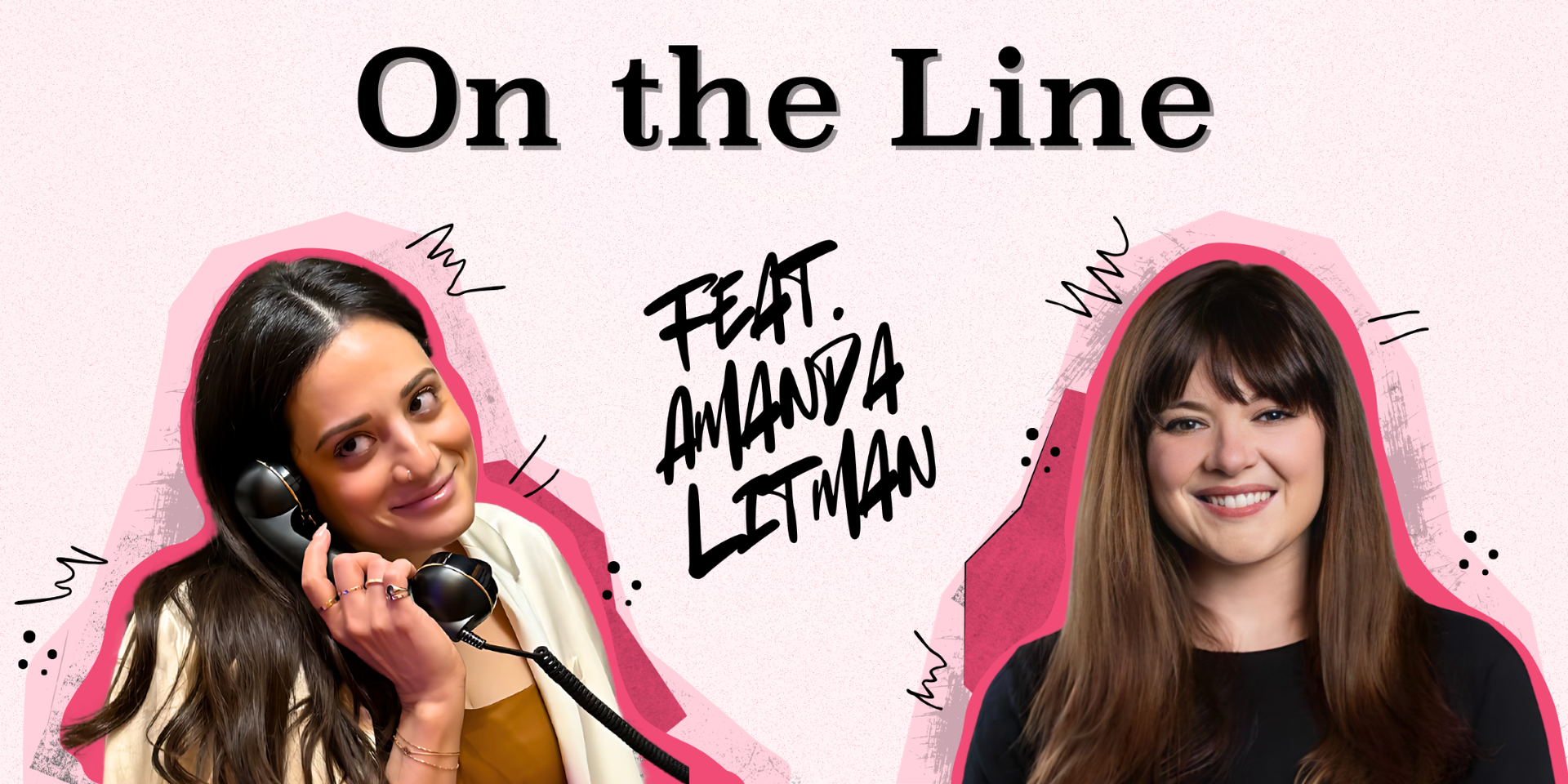
On the mic this week: Amanda Litman is the co-founder of Run for Something and the author of When We’re In Charge, where she explores how the next generation is reshaping leadership. She’s spent years studying how millennials and Gen Z build power, challenge institutions, and lead differently, without sugarcoating any of it!
Pin this:
- Younger generations are rejecting the idea that work should be your entire identity, and they’re building boundaries around it.
- Trust is shifting from institutions to individuals, which changes how leaders show up and build credibility.
- Flexibility is no longer just a competitive perk. Now, it’s a requirement if companies want people to stay.
- Clear expectations and honest communication matter more than performative culture efforts.
My H*ly Sh*t Moment: We’ve spent DECADES building workplaces around systems that were never designed for most of us, and now we’re shocked that people are finally refusing to play along. It’s about time, TBH!
▶️ Press Play
|
📊 Data Is My Love Language: |
Stat: 1 in 5 recent grads say they’re overqualified for their roles
My spiral: The entry-level job market is sooo competitive right now that grads are deliberately applying below their level just to get in the door! 😬
You're inheriting a workforce that arrived already managing down their expectations, and already one bad manager away from quiet quitting.
If your onboarding and growth conversations aren't accounting for that tension on day one, retention is going to be a problem before the 90-day mark.
|
|
|
|
Naturally, we talk a lot about developing our people and creating cultures where growth is expected, but I feel like we rarely turn that lens on ourselves with the same rigor we'd apply to a struggling direct report.
So, with that in mind:
“What part of your leadership style is evolving, and what's resisting the change?”
|
|
|
|
Unfortunately, some HR people are great at creating feedback channels, but terrible at making people feel safe enough to actually use them. 🫣
The most honest intel you'll ever get is in a convo where someone finally believes you won't make it weird! Try asking a direct report:
"What's one thing you wish you could say to leadership, anonymously?"
|
|
|
|
SPONSORED BY CHECKR
Managers and employees are not living in the same workplace reality right now, BTW. 👀
70% of managers trust AI-driven hiring tools, while only 27% of employees do!
It's not a surprise that there's a massive trust gap at the moment, and the data is pretty clear about it!
Checkr surveyed 3,000 workers to map exactly where the divide lives, across hiring integrity, adoption pressure, and day-to-day AI trust.
They put all their findings in an article that I think you'll find interesting.
So take a look at it and be prepared to take some notes! 🤓
|
|
|
|
👂 OVERHEARD IN SAFE SPACE
|
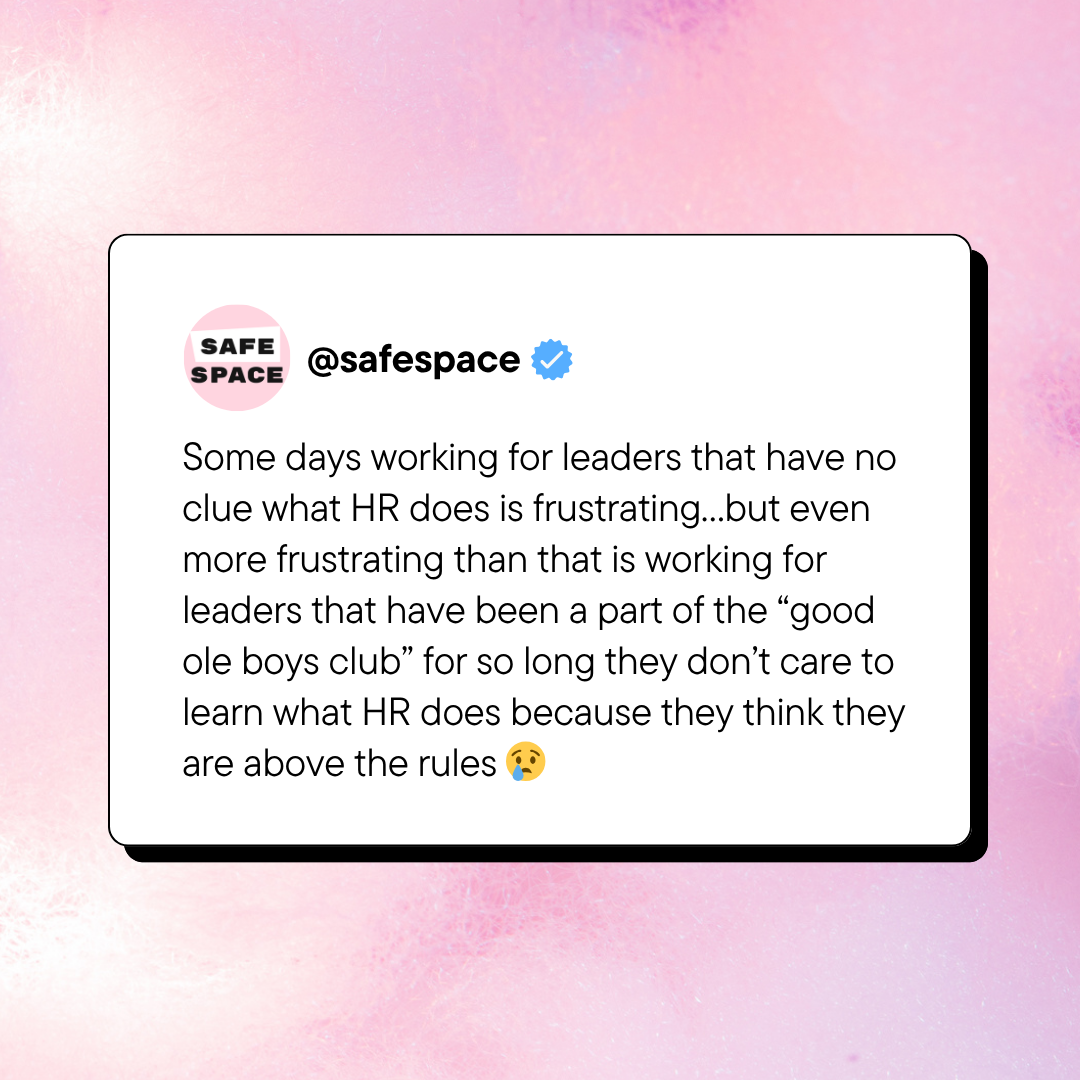
The "I've been here 20 years" crowd is somehow always the least coachable and the most protected… 🙃
Read what members had to say here.
|
|
|
|
Join 9,787 other HR and People leaders in Safe Space
|
|
|
|
Get your brand in front of 170,000+ HR and people operations leaders.
|
Workweek Media Inc.
1023 Springdale Road, STE 9E
Austin, TX 78721
Want to ruin my day? Unsubscribe.
|
|
|
|
|